01 The problem
City Electric Supply runs Connect, a two-day trade conference for roughly 2,000 contractors and vendors. The brief was an event app. The real problem was narrower and much harder: get an audience that doesn't install things to install something, and use it, inside 48 hours, with no prior install base.
Every assumption a normal product makes is unavailable. There's no onboarding funnel, because nobody reads a tutorial in a convention hall. There's no retention curve, because the product dies Thursday. There's no second chance at a first impression, because the whole lifespan is the first impression.
Adoption wasn't a metric on this project. Adoption was the entire design problem.
02 One economy, ten front doors
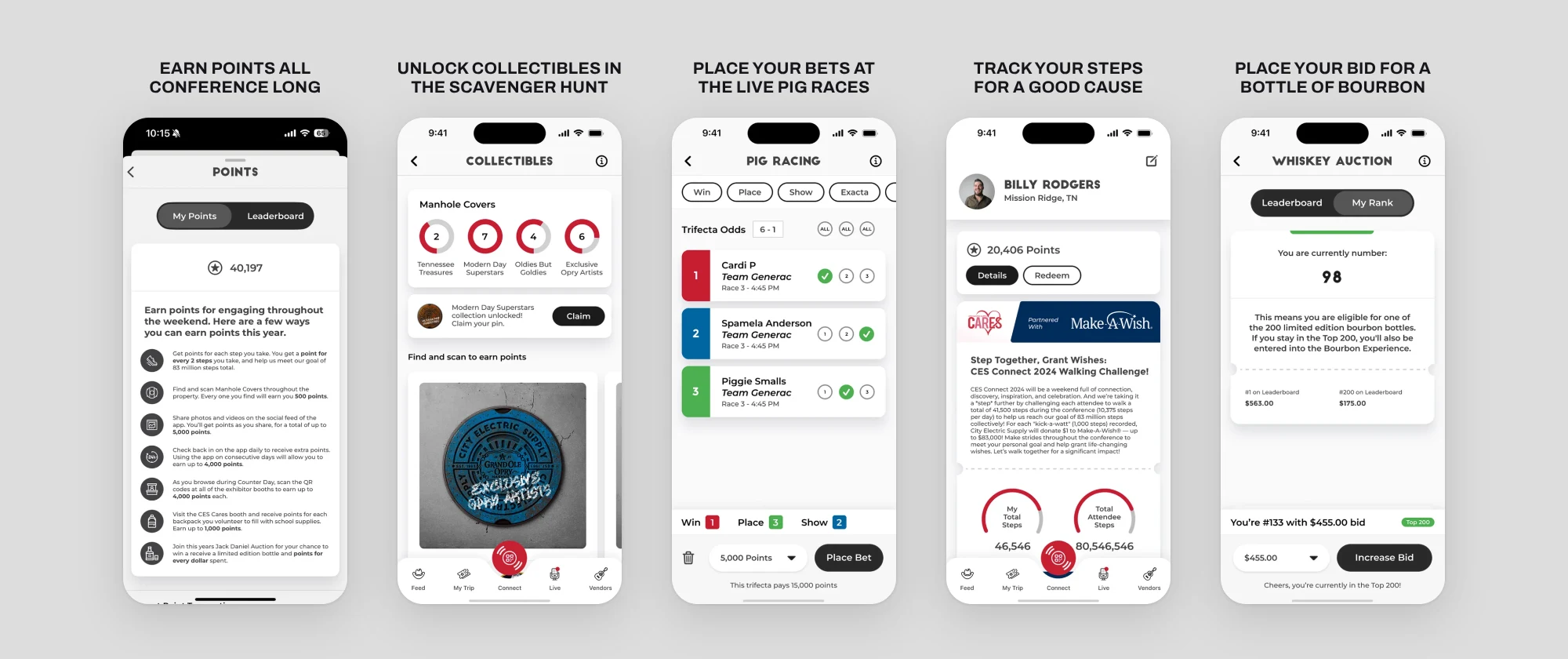
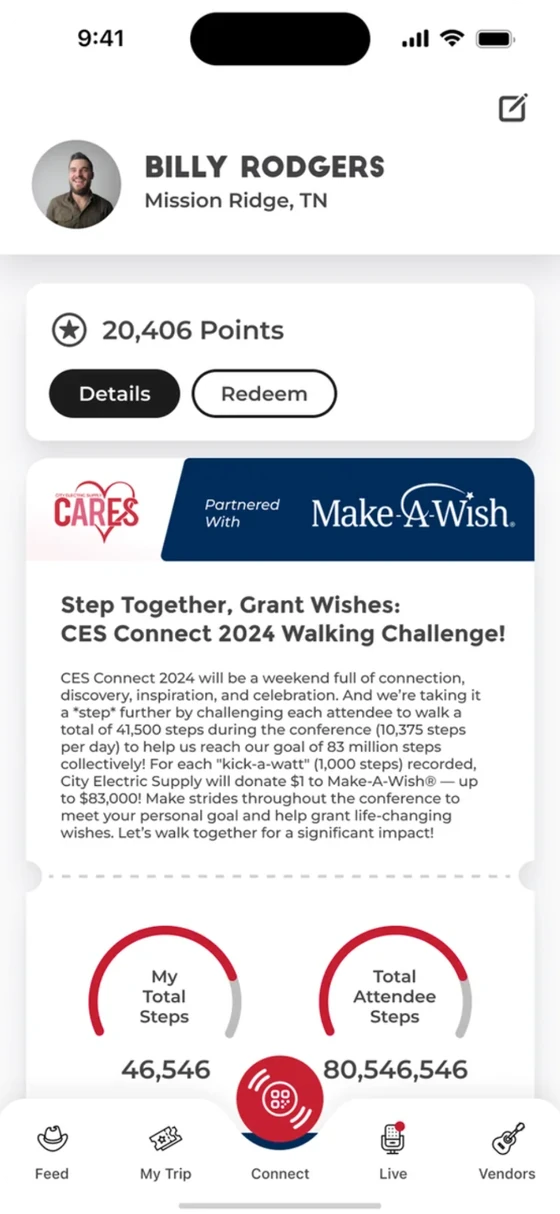
The mistake would have been building ten features. What shipped was one points economy with ten ways in — scan a vendor, walk a step, place a bet, cast a vote, bid on bourbon, find a collectible — all feeding a single balance that spends in exactly one place: the raffle.
That structure is why it worked. A contractor who won't play a scavenger hunt will still walk the floor. Someone who ignores the step counter will still bid on a bottle of Pappy. Each entry point is optional; the currency is not.
Vendors exhibit because they want leads. Attendees want not to be sold to. Most event apps resolve that by nagging.
Instead, scanning a vendor's code was one of the highest-value ways to earn points. The attendee is playing. The vendor is getting a qualified lead in their dashboard. Same tap, both outcomes, zero push notifications asking anyone to do anything.
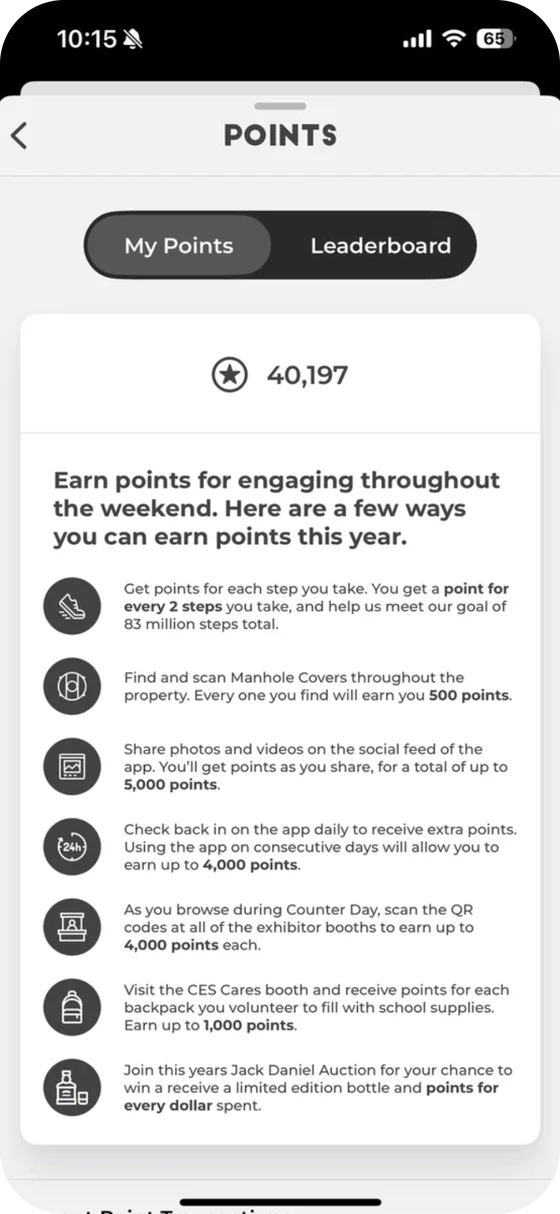
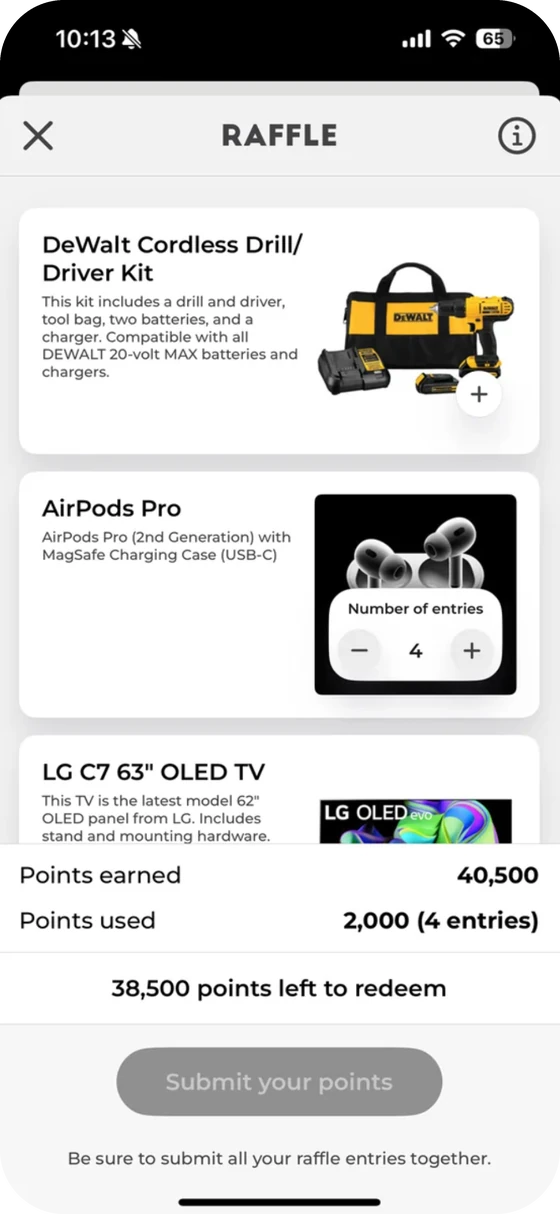
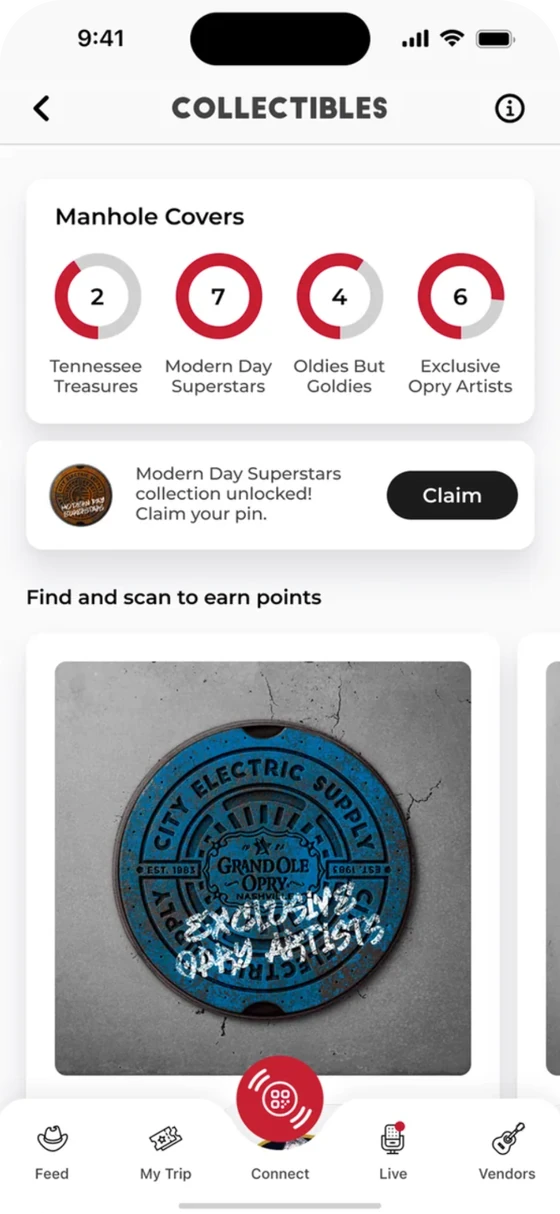
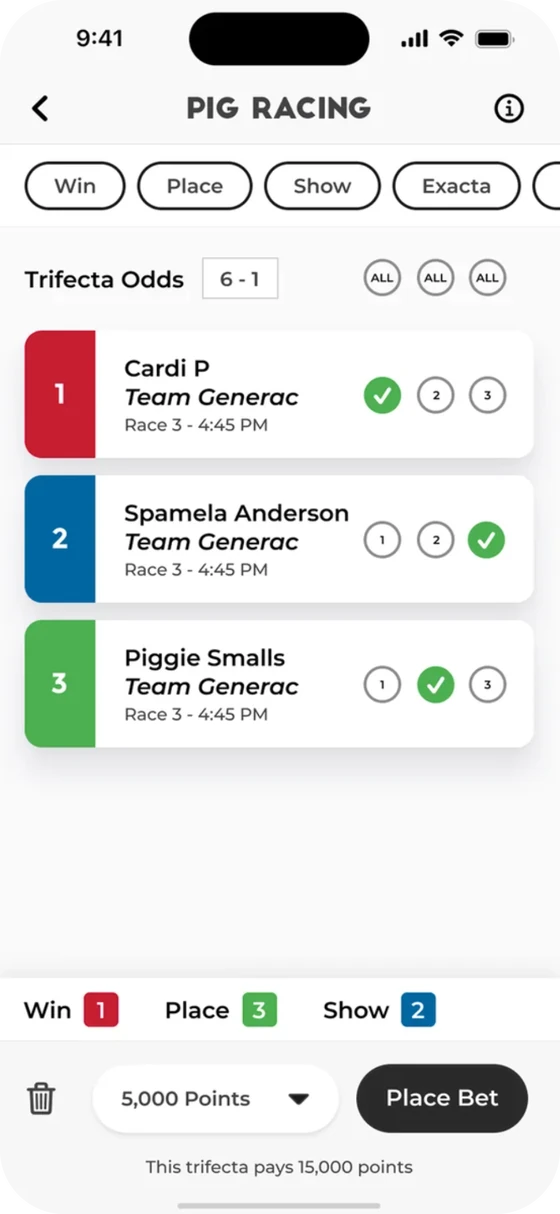
The loop: earn anywhere, spend in one place. A visible points balance with a redemption threshold does the work that a push notification would have done badly.
03 Decisions worth defending
Raffle prizes ran from a DeWalt drill through AirPods to a 65-inch OLED. Multiple tiers meant the balance was always close to something, which keeps the number meaningful at 5,000 points and at 40,000.
The walking challenge tied individual steps to a Make-A-Wish donation, with a running conference-wide total. It gave people who had no interest in competing a reason to keep the app open — and it's the only activity where the leaderboard genuinely didn't matter.
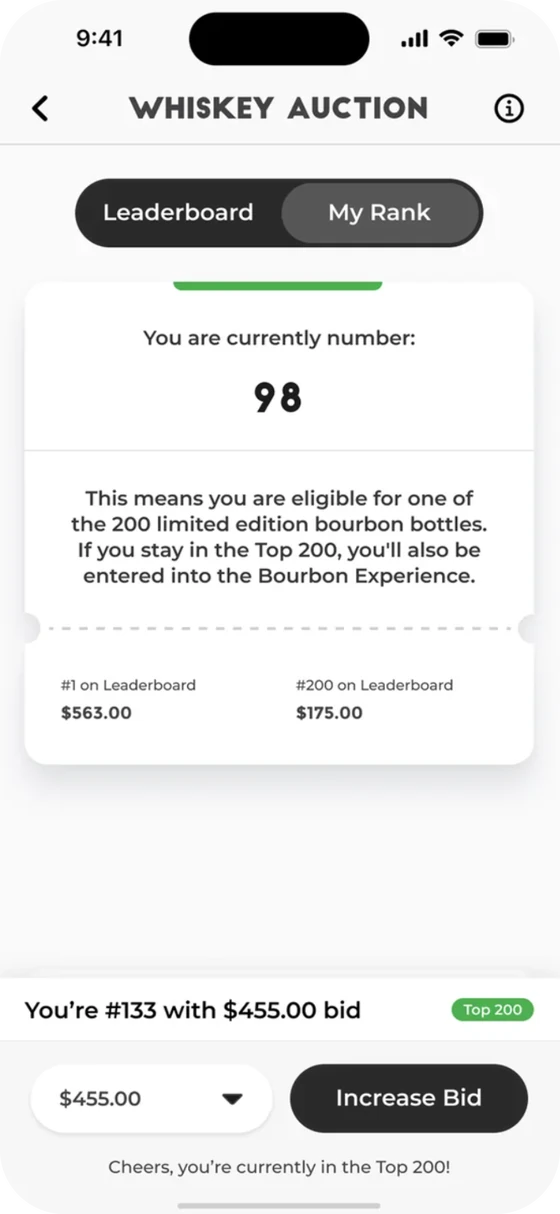
The whiskey auction ran live against 200 limited-edition bottles, with your rank visible against everyone else. Real scarcity, real competition, and a reason to reopen the app between sessions.
04 The unglamorous half
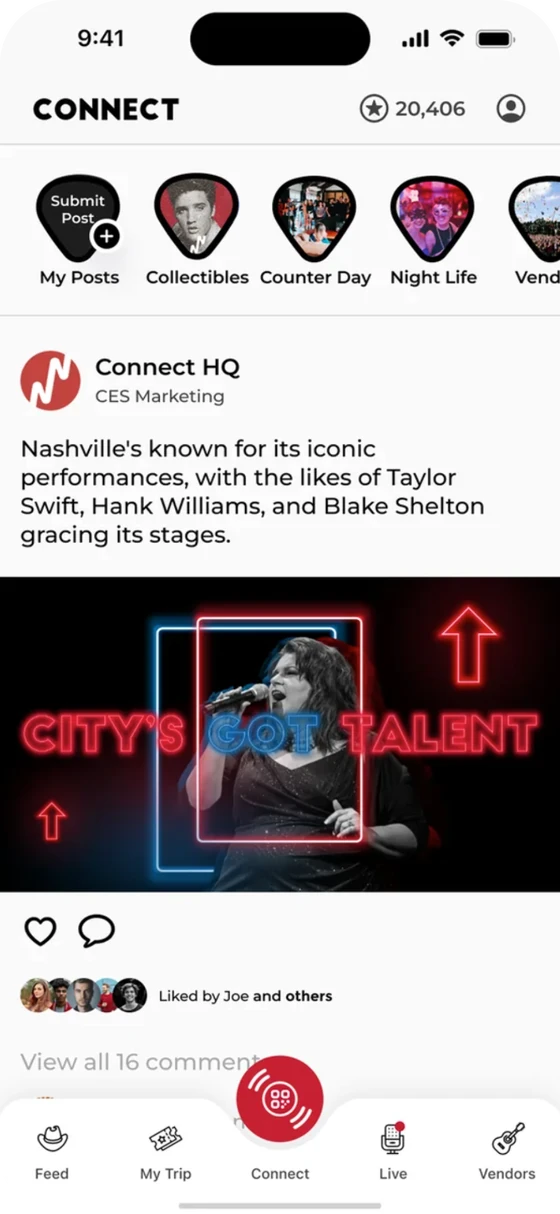
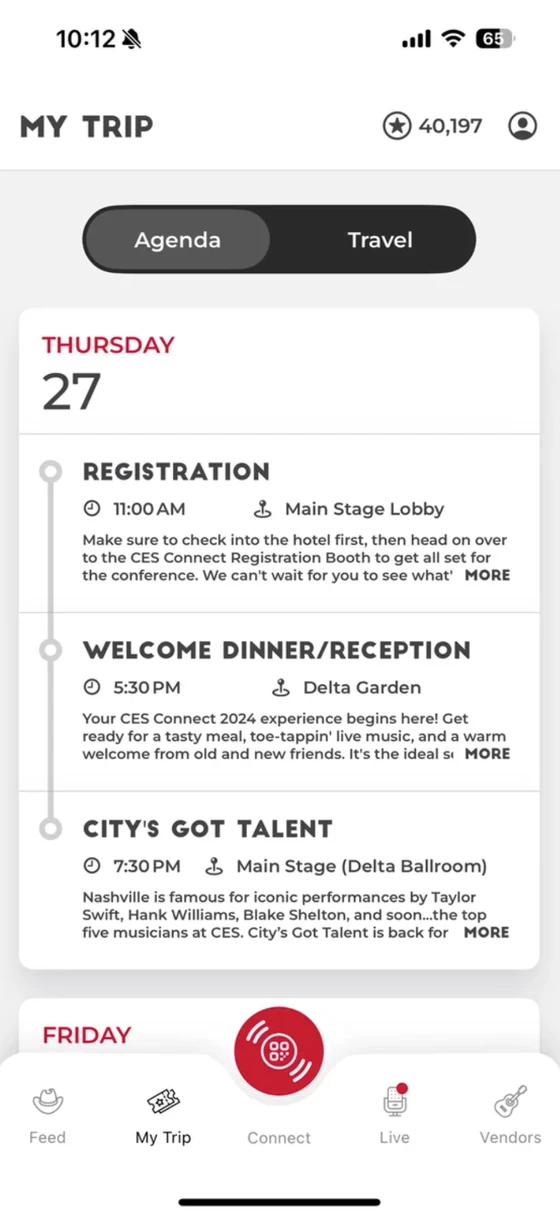
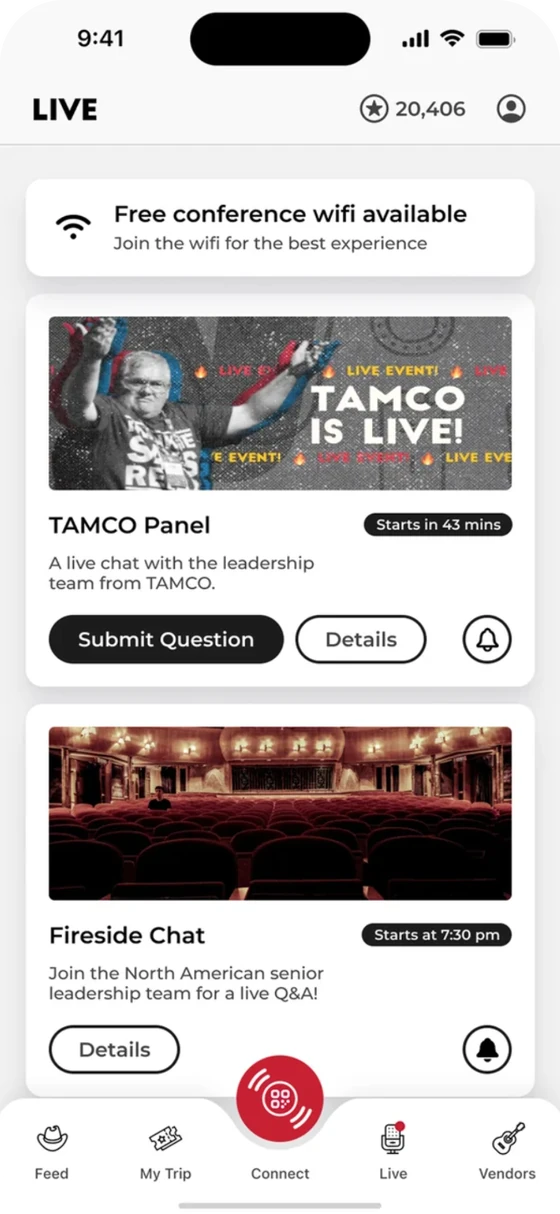
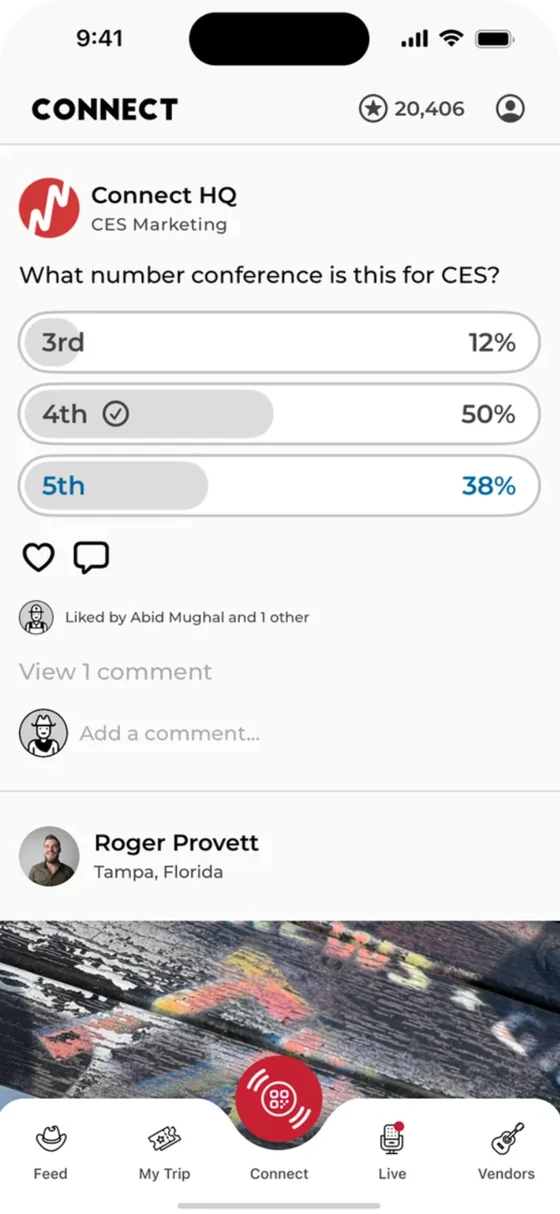
None of the above matters if the app fails at the thing a conference app is actually for. Agenda, session details, live streams, Q&A submission, and interactive polls all had to work first — and had to survive two thousand people on one contended convention-center network.
Everything was built so a slow or dropped connection meant this is quiet for a second rather than this screen is broken. Nobody stands in a hallway waiting on a spinner.
The whole thing shipped on the CES component library. That's the argument for the design system stated as a delivery date rather than a percentage.
05 Results
The contact number is the one that mattered commercially — leads vendors paid to be in the room for, delivered without a single notification asking anyone to scan anything.
06 What I'd do differently
I didn't instrument the drop-off. I know 15,322 scans happened. I don't know how many people opened the app, saw the points screen and never earned anything — which is the number that would tell me whether the economy worked or whether the people predisposed to play would have played regardless. That funnel goes in before the next one.
The side activities launched cold. Voting and bidding both spiked late on day one, once people had seen others doing it. Seeding a few visible participants at the open would likely have pulled that spike forward several hours — a meaningful share of a 48-hour product's life.
What I'd keep: one currency, many doors. It removed every argument about which feature deserved a notification, because the balance did that job on its own.